There’s usually one tooth. A tiny chip off the corner from years ago. A gap you’ve always pushed your tongue against. An edge that’s worn a bit shorter than the one next to it.
Nobody else seems to notice. You notice it every single time you catch yourself in the mirror.
That’s very often where composite bonding comes in. So here’s what it is, what it can and can’t do, and the honest bits worth knowing before you book.
Black Friday & Christmas offer
Professional teeth whitening for £250
A brighter smile in time for Christmas and the new year, carried out by our dental team on Witton Street, Northwich.
Find out about teeth whiteningOffer ends 31 December 2026. Subject to a dental assessment to make sure whitening is suitable for you. Over 18s only. Call 01606 44394 to book.
What is composite bonding?
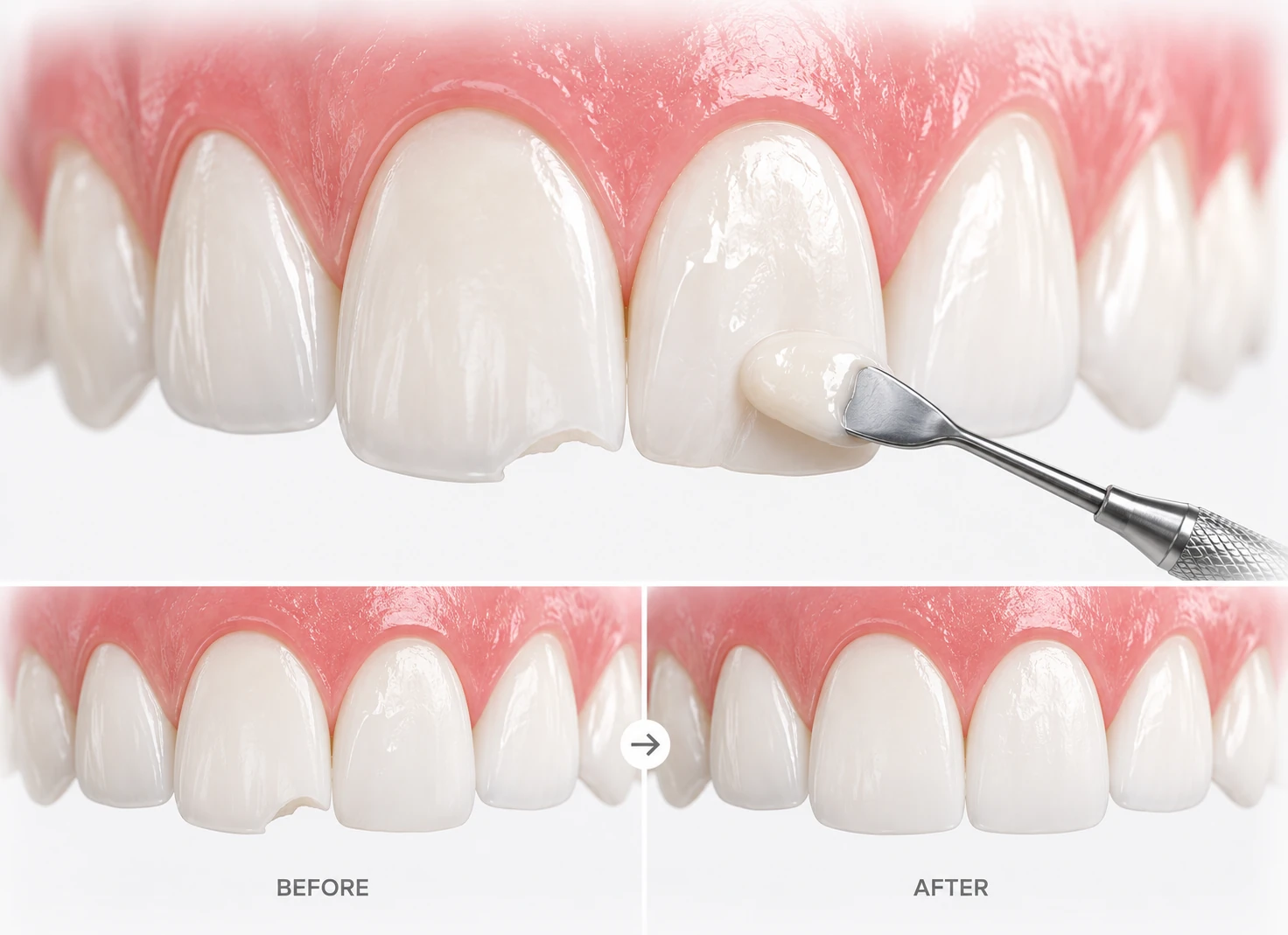
Composite bonding uses a tooth-coloured resin that’s applied to your tooth, shaped by hand and polished so it blends in with the rest of your smile. It’s built up in thin layers and matched to your natural shade.
In most cases little or no enamel needs to be removed. That’s one of the biggest differences between bonding and porcelain veneers, and a big part of why people like it.
What can composite bonding fix?
- Chips and small breaks
- Small gaps between front teeth
- Worn or uneven edges
- Teeth that are a little short or oddly shaped
- Some marks or discolouration on individual teeth
What it can’t do is move teeth. If yours are crooked or crowded, straightening them first (often with Invisalign) and bonding afterwards usually gives a far better result than trying to disguise the problem with resin.
What happens at the appointment?
1. A chat and a plan
We look at your teeth, talk about what’s bothering you and agree on the shape and shade. If you’re thinking about whitening too, it needs to happen first. Composite doesn’t whiten, so it’s matched to the colour your teeth will be afterwards.
2. Building the bonding
The tooth surface is prepared and the resin is added in layers, then set with a special light. Because there’s usually little or no drilling, many people don’t need an injection at all.
3. Shaping and polishing
This is where the skill shows. Each tooth is shaped and polished until it looks like it belongs in your mouth. A few teeth can often be done in a single appointment.
How long does composite bonding last?
Here’s the honest bit. Bonding isn’t forever. With good care it often lasts around five to seven years before it needs polishing, repairing or replacing.
Composite can pick up stains from coffee, tea, red wine and smoking more easily than natural enamel. It doesn’t love nail biting, chewing pens or opening packets with your teeth either (we’ve all done it). If you grind your teeth at night, a night guard will help protect it.
The good news? It’s easy to top up. A chip in bonding can usually be repaired without starting from scratch.
How much does composite bonding cost in Northwich?
At Brunner Court, composite bonding starts from £250 per tooth. The final cost depends on how many teeth you’re having done and how much shaping each one needs. You’ll get a written plan with every fee in it before anything starts, and our full price list is on our fees page.
Composite bonding or porcelain veneers?
Bonding is gentler on your teeth, costs less and is often done in one visit. The trade-off is that it doesn’t last as long and stains more easily.
Porcelain veneers are made in a dental lab, resist staining and last longer. They usually need more of the tooth’s surface to be prepared, and they cost more.
Neither one is “better”. It depends on what you want to change, how long you want it to last and how you feel about the preparation involved. That’s exactly the kind of thing worth talking through in person.
Is composite bonding right for you?
Your teeth and gums need to be healthy first. Any decay or gum problems get sorted before we think about cosmetic work, because bonding on top of an unhealthy tooth won’t last.
If there’s one tooth that’s been bothering you for years, it might be a smaller fix than you think. Have a look at our composite bonding page, or give us a call on 01606 44394 and we’ll talk you through it.